WNE and GIFEN take nuclear to the World Future Energy Summit

With renewed interest worldwide in nuclear energy, and following the most successful edition yet of the World Nuclear Exhibition (WNE) in Paris, it was fitting that the nuclear community had a presence at this year’s World Future Energy Summit (WFES).
The annual event in Abu Dhabi – ‘an intense annual opportunity to navigate all the latest developments and breakthrough technologies from all over the world’ – provided an ideal opportunity to highlight the contribution of the nuclear industry to the themes and discussions of the summit. It also gave WNE and GIFEN, the French nuclear industry trade association, a global platform to talk about civil nuclear energy, the expertise that France brings to bear in this important sector, and to encourage delegates to add WNE 2027 to their diaries.
The importance of WFES is clear through its end-of-show statistics. Organisers said the three-day summit drew more than 50,000 industry professionals, policymakers, investors, and stakeholders from around the world. It featured some 450 exhibitors and more than 300 speakers. Among delegates from 124 countries were 15 heads of state.
The year of nuclear renaissance?
Will they remember WFES 2026 as the year of the ‘nuclear renaissance’? It is perhaps too soon to tell, but the message was certainly there.
Hervé de Trémiolles, international development manager for the French Nuclear Strategic Committee (CSFN), serves as liaison between France and the UAE in the nuclear sector. For him, WFES 2026 will go down as “a pivotal summit” when he observed a sea change in how nuclear energy is perceived.
At past editions, he said, it was evident that 'future energy' primarily meant 'renewable energy,' with many exhibitors showcasing photovoltaic or wind solutions, often complemented by storage solutions.
“Over the last 3-4 years, however, we've witnessed a significant shift in the perception of nuclear energy, and we are now seeing a global 'nuclear renaissance.'
“The WFES 2026 edition particularly reflected this trend,” he said. “I was pleased to observe several key players showcasing nuclear solutions.”
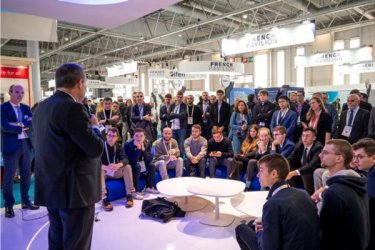
One of the standout features of WNE is the Connect to Nuclear program—an initiative launched in 2023 that aims to attract young talent and those considering professional retraining by offering them a unique platform to meet the global civil nuclear community. Equipped with conferences with experts, testimonials from intern and junior profiles, animation and workshops, guides tour of the show and networking opportunities with industry players, the program provides participants with a well-rounded introduction to the industry.
WNE 2023_© Collectif Favart
First French national pavilion
One of those key players was France. This year, it had a national pavilion for the first time since the annual summits began in 2008. The French Nuclear Pavilion was coordinated by GIFEN and CSFN, with the support of RX France, and enjoyed the patronage of the French embassy in the UAE. Thirteen companies joined the pavilion as exhibitors.
It will come as no surprise within the industry that there were almost no topics covered at the summit which did not have a nuclear energy element; indeed, many of them were also highlighted at WNE 2025 under its own theme ‘Beyond electricity’.
Take hydrogen and green fuels. Visitors to WNE saw how high-temperature electrolysis, powered by nuclear energy, can provide a clean and efficient method of splitting water into its component parts, hydrogen and oxygen. The ramifications of this emission-free process go to the heart of what these two important events, WEFS and WNE, stand for: a way to meet increasing energy demands while reducing reliance on fossil fuels in the transition to sustainable energy.
At the WNE 2023 conference, Emilie Sauchay, HR Manager of Ineo Nucléaire, discussed their strategic workforce planning for 2022 and 2023. She noted the recruitment of skilled workers as a significant factor but emphasised the necessity of making training programs available for professionals outside of the industry.
“For me, the most important one is to be able to train people in our professions, to be able to attract employees who are not currently in the sector but who would like to join this dynamic sector,” Emilie Sauchay stated. She also added that to support the growth of their workforce, Ineo Nucléaire developed training academies and a network of training centres.


Aspects of the nuclear ecosystem
Similarly, topics such as renewable power, desalination, recycling and circular economy, alternative clean fuel, AI-driven energy management, and green finance touched aspects of the nuclear ecosystem, many of them discussed in detail at WNE.
The French pavilion stood as a testament to the resurgence of nuclear energy, Hervé de Trémiolles said, and highlighted France's pivotal role in its ongoing development. “France's strong presence at this summit served to further strengthen the cooperation between France and the United Arab Emirates in the nuclear energy sector. Such events, while distinct, are highly complementary to major specialised gatherings such as WNE, collectively fostering global dialogue and collaboration in the nuclear field.”
At the summit, Farahnaz Laldjee, general secretary of WNE, delivered a keynote address that presented the French nuclear model as ‘A complete value chain to ensure energy sovereignty’. She highlighted France’s commitment to nuclear energy and the country’s involvement with the UAE in development of its own nuclear industry.
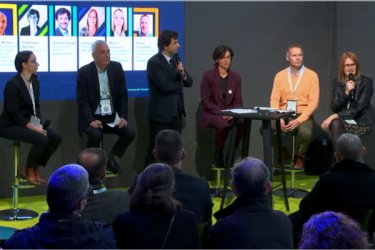
Screen grabbed from Youtube
One of the lowest carbon footprints in Europe
Domestically, she said, “around 70% of France’s electricity comes from nuclear generation, and our country has one of the lowest carbon footprints in Europe.”
As for safety, the EPR2 technology that will be used in France’s current newbuild programme incorporates post-Fukushima safety features, including a double containment and a core catcher to prevent radioactive releases, passive cooling systems operated without electricity, and digital instrumentation and control to enhance monitoring.
France and the UAE enjoy a long-term nuclear partnership, she said, citing support for the Barakah nuclear power plant in safety, engineering and training; supply of fuel assemblies; and promotion of local supply chains and technology transfer under the E-Fusion initiative which was launched in 2019 to foster collaboration between the UAE and France.
Noting the multinational nature of the nuclear community, she described the UAE “as a platform to address new nuclear markets”, mentioning Egypt and Saudi Arabia where nuclear energy programmes are in different stages of development.

Complete value chain of nuclear generation
Laldjee said France organises its nuclear industry to achieve sovereignty and energy security, relying on “the capacity of the industry to handle the complete value chain of nuclear generation from uranium mining to reactor construction, decommissioning and waste management”.
“It is precisely this comprehensive expertise and end-to-end industrial capability that allow us to support our strategic partners worldwide.”
Significant challenges remain for the global nuclear industry, she said, and France is committed to contributing to the debates through its participation in events such as WFES, and its own gathering of the world nuclear community: WNE.
“The next edition of World Nuclear Exhibition will be held in Paris, 7 to 9 December 2027, with new features and a bigger venue,” said Laldjee. “In the meantime, you may follow us on social media.”
* French Pavilion Exhibitors at WFES: Altrad Endel / Nusam, Apave, Bertin Technologies, EDF, Egis Group, Ekium, Fives, Hitachi Energy, Groupe M, Nuvia Sigma, Oakridge, Sharemundo, Veolia
#worldnuclearexhibition
#wne2027
#wfes
#nuclear renaissance
#beyond electricity