WiN Global offers a female take on nuclear industry
It’s a sign of the times that ‘women in nuclear’ was only a small part of the programme at the recent global conference of Women in Nuclear (WiN Global). What delegates were more focused on was the evolving role of nuclear energy in addressing major worldwide challenges including climate change, sustainability, the rampant demands for electricity from new digital technologies etc.
As modern women in nuclear might say, it’s not all about us, it’s about the industry and the science and contributing to a better world.
There are of course ongoing challenges to achieving gender parity in the nuclear sector, as there are in other traditionally male-dominated industries. The 2023 Gender balance in the nuclear sector report by the Nuclear Energy Agency (NEA) found that women made up 25% of the total workforce, 21% of the STEM workforce, and 18% of senior leadership roles. Recruitment provided some cause for optimism: women accounted for 29% of new hires, but still only 25% of STEM new hires.
Just as the issues are not new, the actions needed to attract and retain female talent in the nuclear industry have been discussed since before WiN was founded in 1992, and crop up regularly at key industry events such as WNE.

The world as a whole is belatedly waking up to the importance of nuclear power in the overall energy mix. After more than two decades of stagnation, the capacity of the global nuclear fleet is expected to increase by one-third by 2035.
That’s the projection of the latest World Energy Outlook from the International Energy Agency (IEA) based on existing energy policies and the expectation of “a record high in nuclear power output” in 2025.
"Technology advances… are improving the outlook for nuclear power,” says the report. “As demand surges and the need for reliable, low-emission baseload electricity increases, nuclear is increasingly seen as a critical part of a secure, affordable and diverse electricity mix."
It’s a welcome reversal in fortune for the nuclear industry, which had “suffered some decline and stagnation” from the late 1970s to early 2000s, although its share of world electricity generation remained at 16-17 per cent.
Now, with the very public support for nuclear by the current US administration, the French government’s new multiyear energy programme (PPE) putting renewed focus on nuclear, and other countries looking into it, the nuclear industry appears to be gaining momentum. This point was not lost on the international visitors, delegates and exhibitors who attended the 2025 edition of the World Nuclear Exhibition (WNE) in record numbers and contributed to the buzz in the exhibition hall and conference rooms.
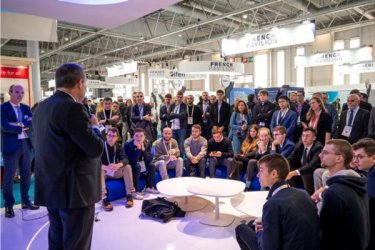
WNE 2023_© Collectif Favart

‘We need more people’
William Magwood, director-general of the NEA and a keynote speaker at this year’s 33rd annual WiN conference in Korea, put this in context. “As you know,” he said via Instagram, “we are in a new era, and we’re going to be seeing a lot of new interest in nuclear energy, but if we’re going to be successful, we need more people, and that includes women.”
Getting more women into the nuclear sector was “one of the most important activities we’ve undertaken in a long time”, he added.
Since it was founded in 1992, WiN – which was created as a space for women to connect, share concerns and foster open discussion grounded in scientific evidence – has been a strong advocate for environmental sustainability, diversity, and gender equality.
This was reflected by Young Sil Sul, president of WiN Korea, in her welcome to delegates to the five-day event in the southern city of Gyeongju. “We firmly believe that this conference will serve as a valuable platform for professional exchange, global cooperation, and inspiration,” she said.
Rich and diverse programme
Every indication confirms that it did. Andrea Bachrata, president of WiN France, found the programme “rich and diverse”, encompassing technical sessions on nuclear technology as well as a series of “engaging” workshops dedicated to gender balance, mentoring, and a pitch contest for young professionals.
She told us that WiN Global conferences – which she has attended since 2011 – “are consistently characterised by a strong sense of sisterhood, the hospitality of the host country, and the distinctive WiN spirit.” This edition was no exception with plenary sessions and workshops attracting large audiences, while the technical and cultural visits organised by the hosts provided valuable opportunities for networking and the exchange of experiences.
Andrea said the event provided “a different feeling compared to male-dominated conferences”. The organisers’ attention to detail, along with the shared common thread of WiN, and the leadership-oriented discussions all contributed to a “unique experience… highly valuable for improving soft skills, encouraging a ‘dare’ mindset, and building confidence”.
Great impact of diveristy
Gabrlele Voigt, a past-president of WiN Global, moderated a mixed panel titled ‘Women‘s leadership and diversity: driving innovation and trust in the nuclear sector’. Introducing the topic, she said studies have clearly shown that diversity, specifically in decision-making positions, has a great impact on the success of institutions and companies, and contributes to building workplace trust and motivation.
With a tripling of demand for energy projected over the next decade, the nuclear field – still male-dominated – needs more women to be educated, trained and finally employed and retained. “They will not only bring additional technical expertise for innovation but also provide the soft skills that leaders need,” she said.
Soft skills, in the view of panellist Ivan Jancarez, the Czech Republic ambassador to Korea, often made women more efficient decision-makers and stronger negotiators.
At the WNE 2023 conference, Emilie Sauchay, HR Manager of Ineo Nucléaire, discussed their strategic workforce planning for 2022 and 2023. She noted the recruitment of skilled workers as a significant factor but emphasised the necessity of making training programs available for professionals outside of the industry.
“For me, the most important one is to be able to train people in our professions, to be able to attract employees who are not currently in the sector but who would like to join this dynamic sector,” Emilie Sauchay stated. She also added that to support the growth of their workforce, Ineo Nucléaire developed training academies and a network of training centres.

Jancarez was one of five panellists drawn from across industry, academia, and governance who introduced a variety of perspectives to the discussion of the unique and well-known challenges that women traditionally face in forging careers. Artificial intelligence (AI), for example, threatens to take over some of the current positions dominated by women. Tina Hernandez, president of the Institute of Nuclear Material Management (INMM), recommended that women be involved in AI developments and applications.
Janette Shimell, portfolio director of AtkinsRéalis, highlighted the link between diversity and innovation, while Prof Dong-Wook Jerng from the Chung-Ang University in Korea, said mentoring from an early age was a must, while clear career pathways, alongside educational opportunities, would help make the nuclear field more attractive to women.
Improve emotional intelligence
WiN Global president Melina Belinco reflected further on the dual roles and gender stereotypes women face. In addition to mentoring programmes such as the WiN mentoring platform and the NEA initiatives among many others, specific programmes on leadership and communication had to be made available. There was also a need to train men how to better understand and communicate with women; this would improve emotional intelligence and conflict management.
A better definition of ‘excellence’ would be useful, Melina said, as the current understanding is too narrowly defined as technical brilliance alone.
In summary, Gabriele noted the issues raised were not new. While the nuclear sector had made progress in gender balance and diversity, the needs of females still needed to be taken into consideration for the industry to be successful in attracting newly qualified female nuclear engineers and scientists to the job market.
More than 30 WiN chapters were represented in South Korea, and the organisation hopes as many or more will make the trip to Tajikistan for the 2027 global conference, as well as swelling the numbers of women contributing to the programme at WNE 2027 in Paris from 7-9 December.
Back home from Korea, WiN France president Andrea reflected: “I was pleased to take part in this event, to present the outcomes of our national chapter, to exchange views on future initiatives, and to contribute to strengthening the network, including WiN Europe.”